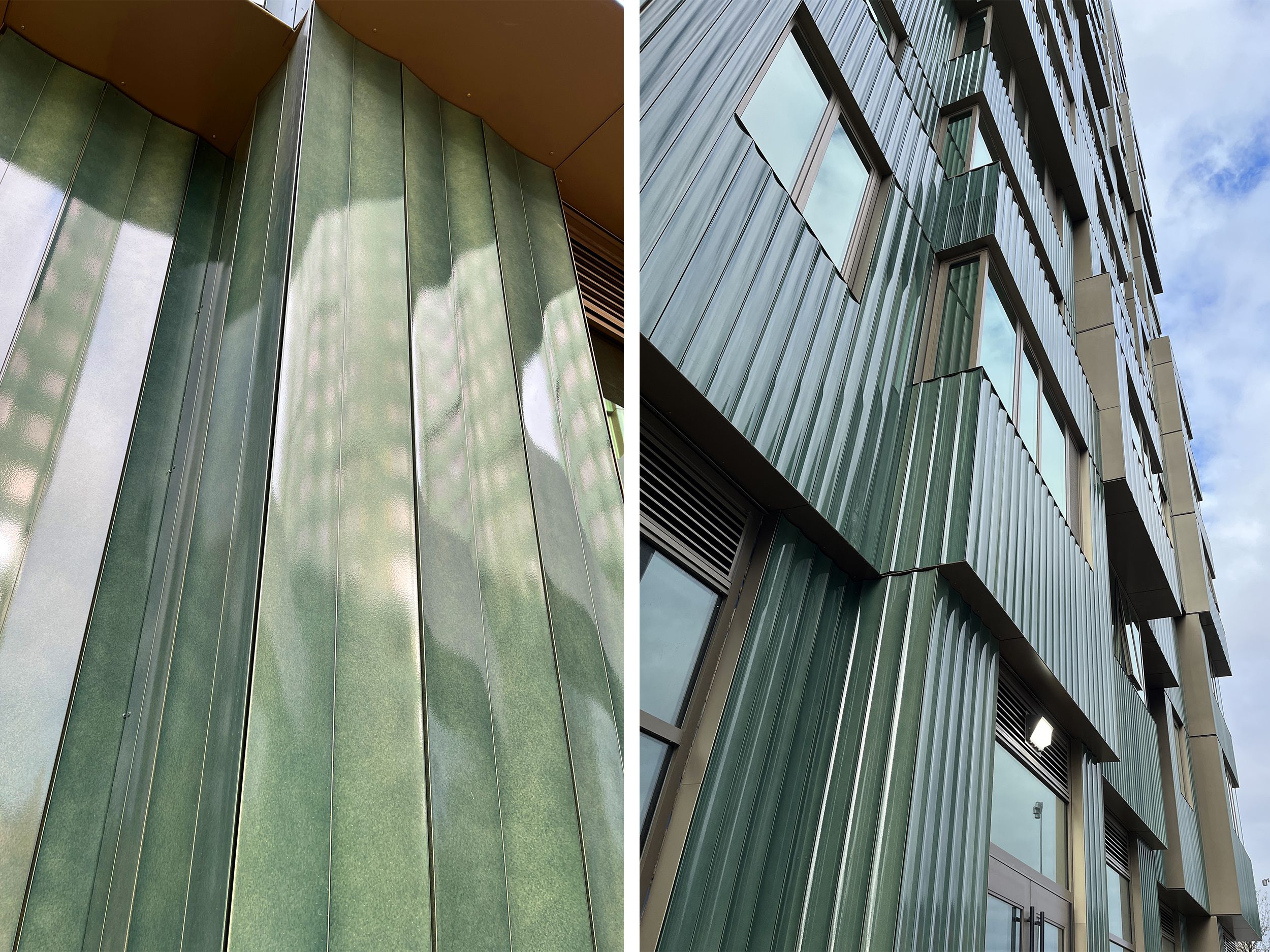
From Terracotta to a New Aluminum Skin:
Same Vision, New Expressive Power
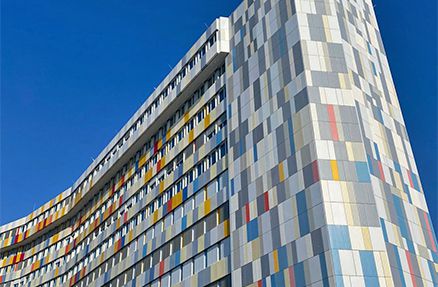
The facade was originally designed using glazed terracotta, with large elements and a dynamic composition. However, the surge in energy costs—especially gas prices, which soared in 2022—made the originally selected material unsustainable for the investor. The client therefore chose not to revise the design concept, but to
reinterpret it by seeking a more sustainable solution, without compromising on aesthetics or performance.
At this point,
Aliva was brought in to redesign the envelope of two residential buildings within an international innovation hub in Boston, in collaboration with the Dutch architecture firm
MVRDV, a leading figure on the global architectural scene, known for iconic projects such as the
Depot Boijmans Van Beuningen in Rotterdam, the
Valley Tower in Amsterdam, the
Tainan Spring urban landscape, and the recent
Tiffany & Co. flagship store in Singapore.
A Facade Designed to Last: Aesthetic and Performance in Balance
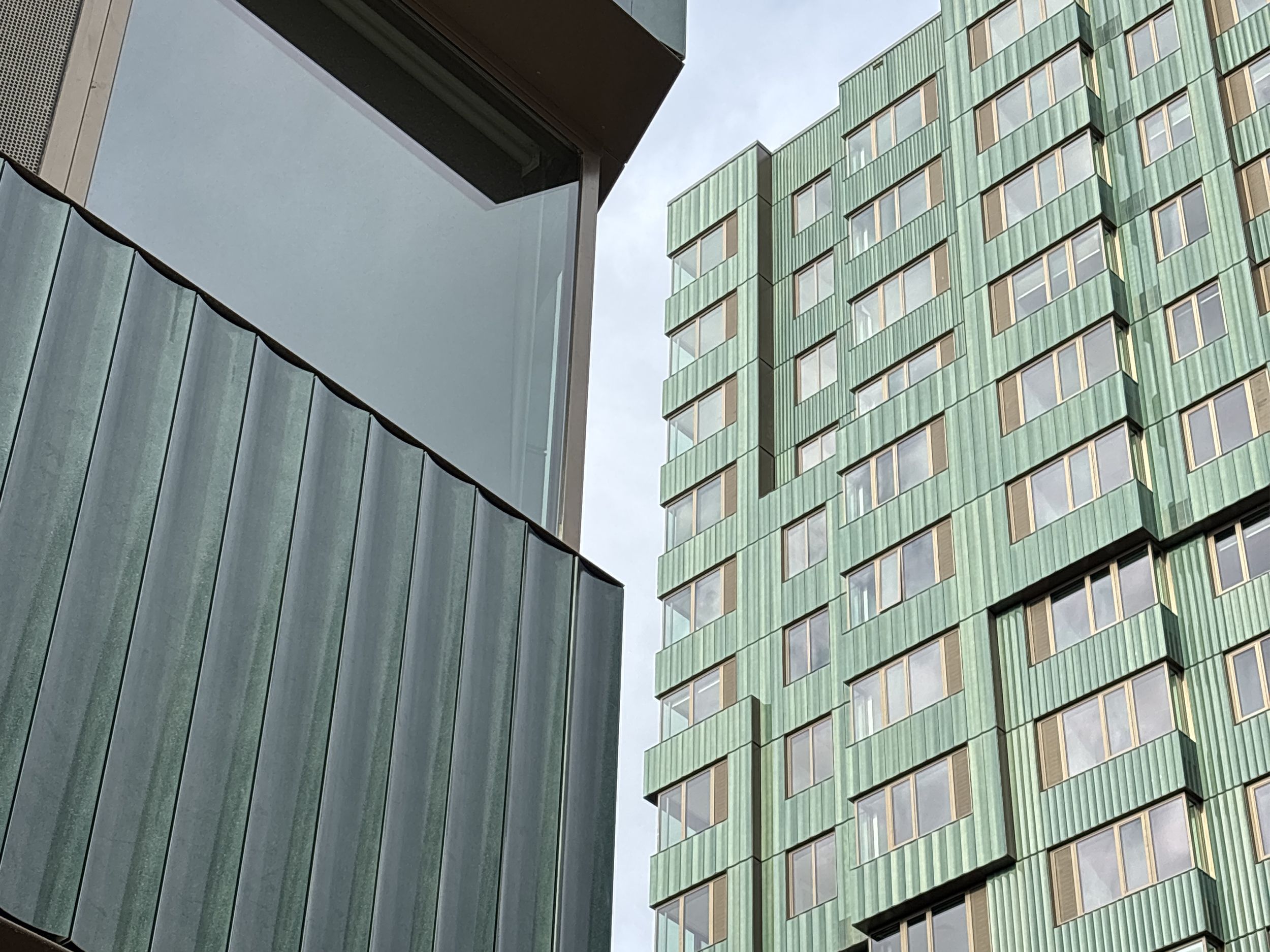
The main request? To preserve the design intent envisioned by the firm, without compromise. The solution: Alucovering, a cladding system made of extruded aluminum alloy, 100% recyclable and composed of up to 80% recycled material. Not just an alternative to terracotta, but an engineered solution designed to deliver:
• Design flexibility
• Maximum durability (AAMA-2605 certified)
• Color and material fidelity through a
three-layer coating process
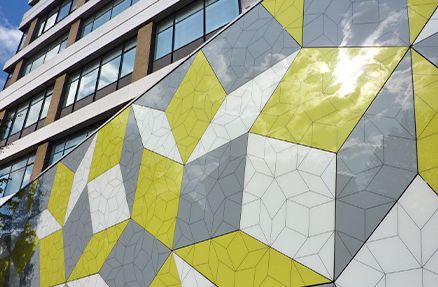
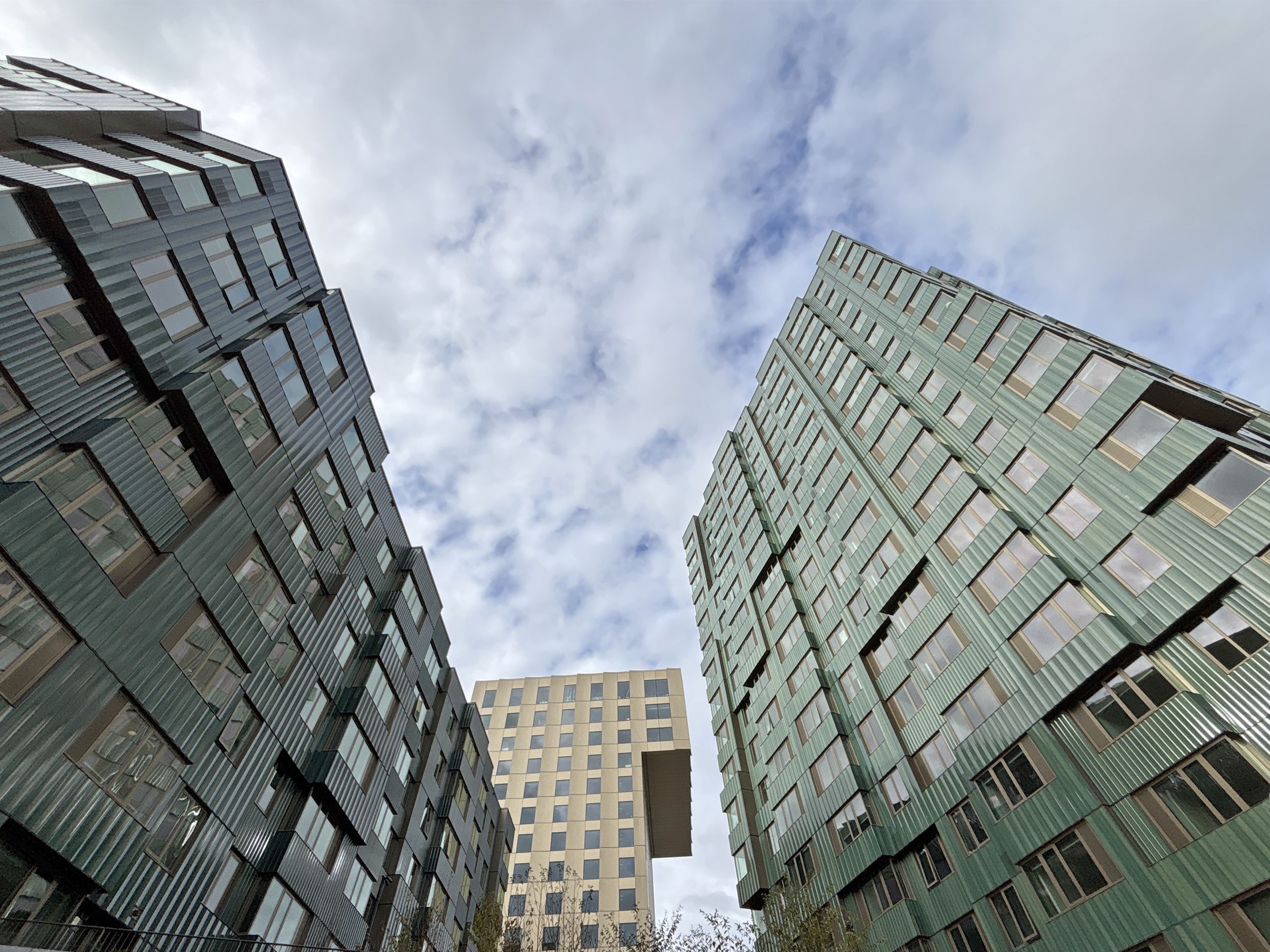
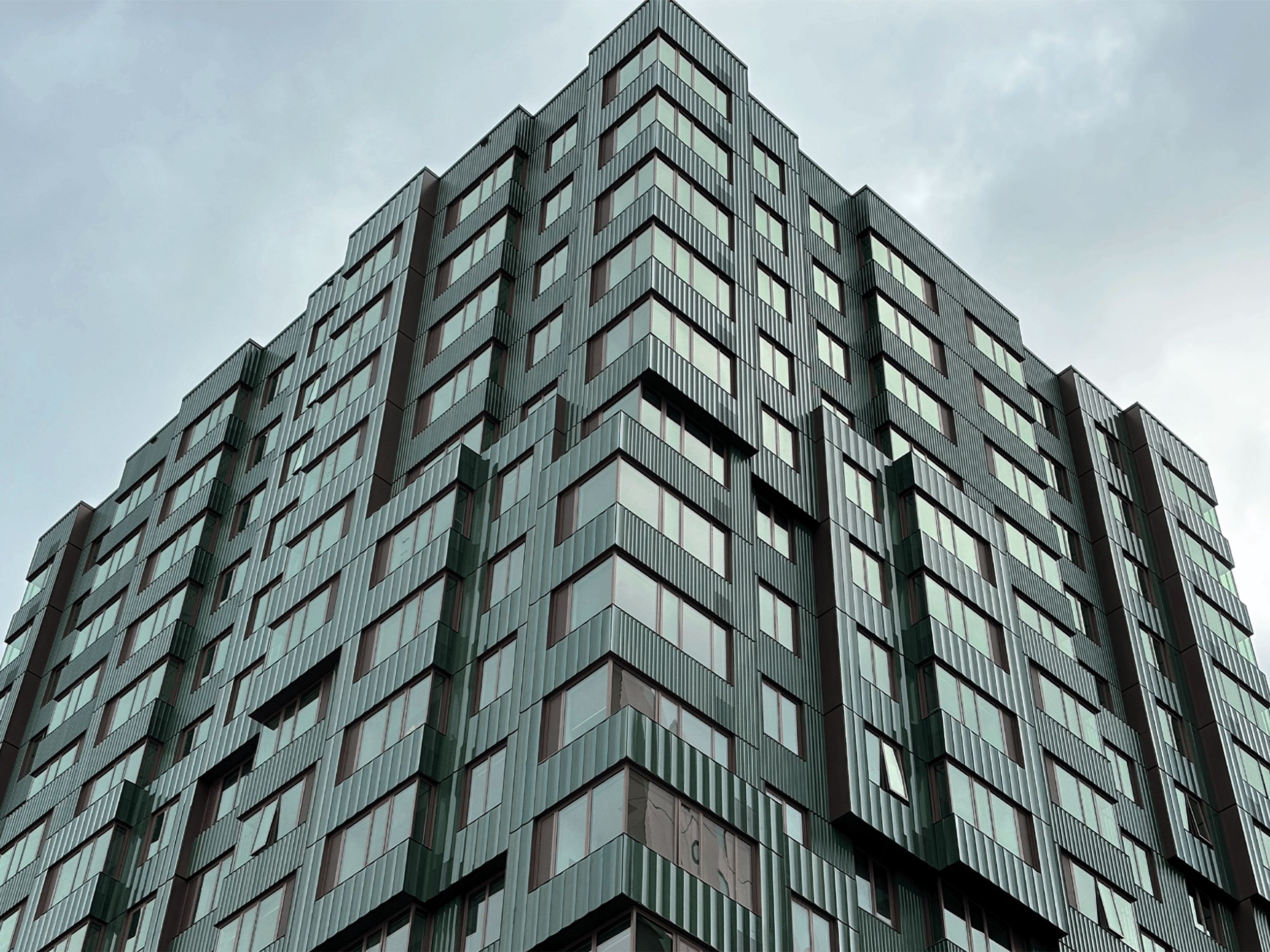
Two custom color finishes were developed to match the concept of each building:
Mid-Rise: dark tone (Dark Green Glazed) +
High-Rise: light tone (Light Green Glazed).
Both were achieved through a coating cycle consisting of a primer, a semi-transparent colored glaze, and a transparent protective finish. The final result is a shimmering surface, weather-resistant and backed by a
20-year warranty.
Custom Engineering: 16 Dies for a Three-Dimensional Architectural Skin
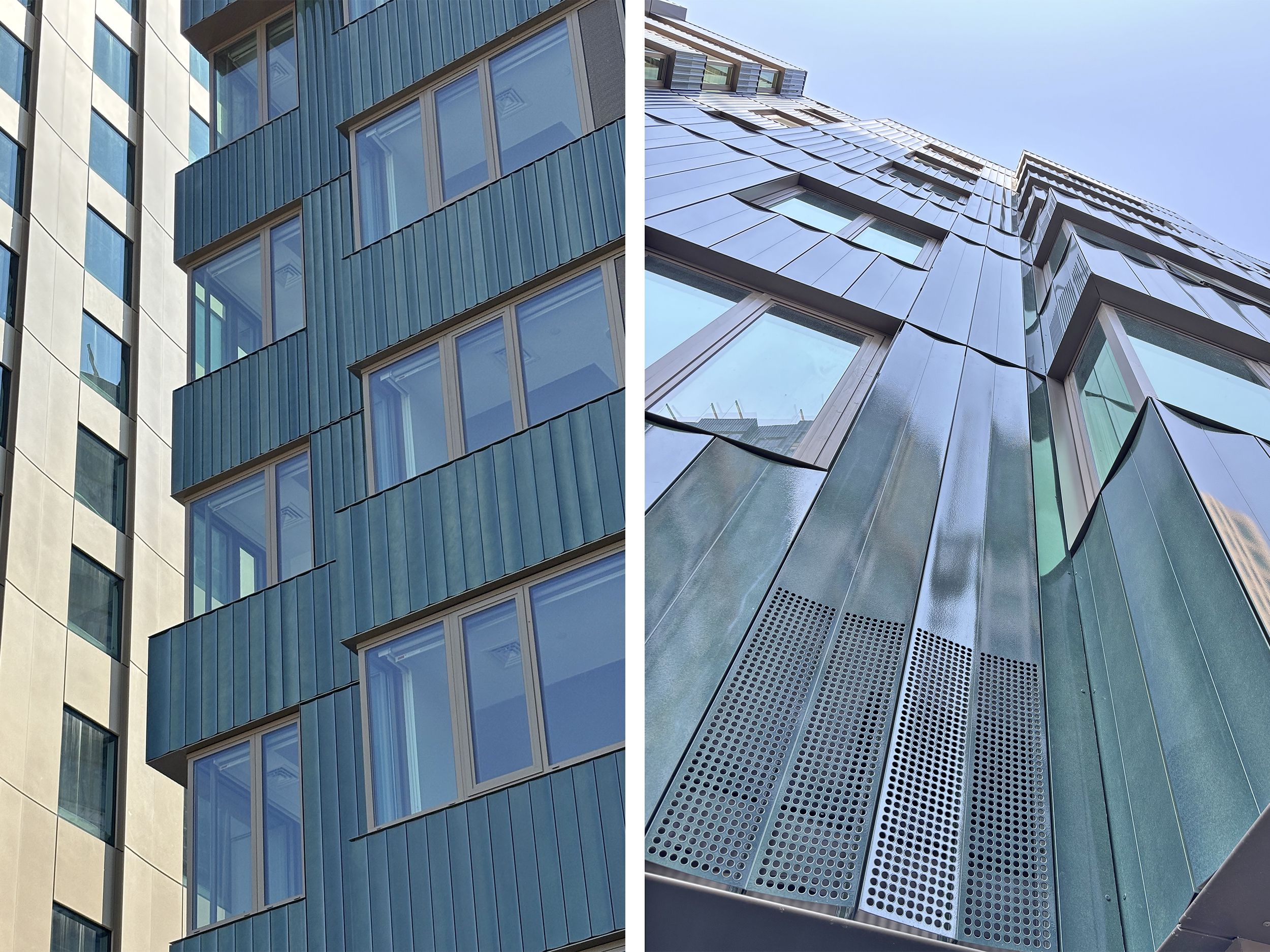
This was not simply a material change, but a complete rethinking of the facade system. The aluminum slats were designed with a
vertical, concave and convex layout to recreate the original sense of movement. Aliva developed
16 different dies to produce as many fluted profiles, each with specific dimensions, giving shape to a bespoke architectural skin aligned with the studio’s design.
The engineering process took over
8 months of technical design, in close synergy with the designers, client, and installer. Once the system was validated,
production was completed in 6 months, with precise and coordinated logistics:
•
Mid-Rise: 8,000 cladding modules (580 perforated) + 84 corner sheets
•
High-Rise: 14,500 cladding modules (1,080 perforated) + 160 corner sheets
• Shipping: 9 containers of panels + 1 container of substructure
Installation, entrusted to
Lymo, spanned 12 months.
The Value of an Integrated Solution
The choice of Aliva was not only technical—it was strategic. The Italian company enabled the client to preserve the project’s identity through a tailor-made solution that integrated aesthetics, sustainability, and performance. An approach that reinforces the value of our offer: a complete service, from co-design to on-site delivery (overseas), with a single point of contact, one system, and infinite expressive possibilities.
Features:
Address: 100 Western Ave, Boston, MA 02134
Developer: Tishman Speyer
Architectural Design: MVRDV (NL)
Facade System:
Alucovering by Aliva
Installation: Lymo
Supply: 22,500 cladding modules

 ALIVA USA INC